Tuesday, 7 August 2018

Grocontinental: the Story of a Helpful Compliance Officer


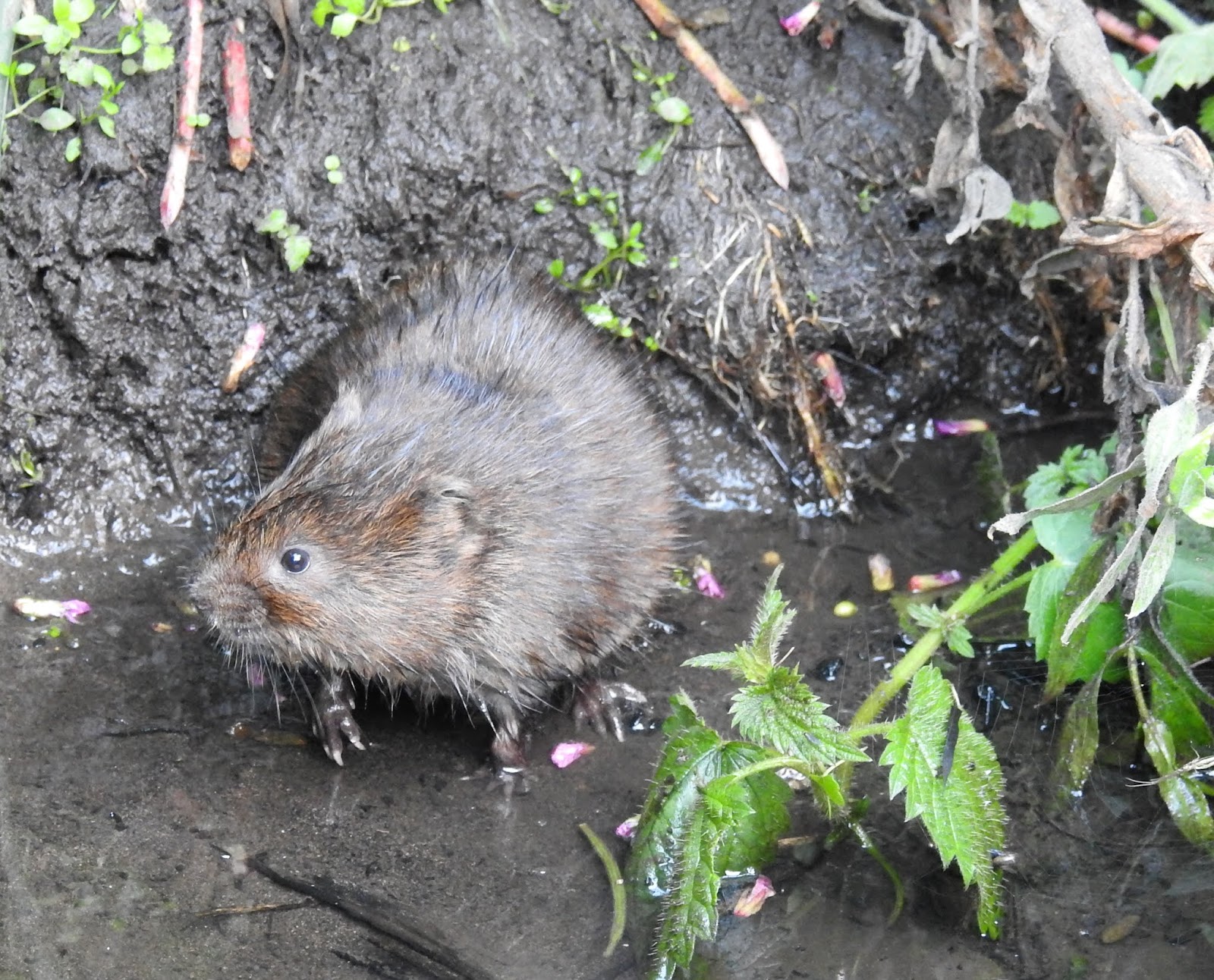
One of the shy Grocontinental voles.


Grocontinental's Compliance Officer explains how they have not only protected but enhanced the water vole habitat on this busy industrial site. Very few predators here too, which is a bonus!


The posts are being kept in to mark the boundary.
Below, plenty of burrows in the banks.


And plenty of latrines.


 There are still one or two areas of the site that can be tweaked, but they're on the list, and Grocontinental are asking the Whitchurch Water Vole Group and Shropshire Wildlife Trust for advice.


I was invited on site for an hour and a half last night and saw three young voles. So things are looking good!


Perhaps most importantly, this colony helps keep other, nearby colonies - like the one I follow at Edgeley Road - alive and thriving. Isolated colonies quickly die out, but as long as the voles can travel between groups and exchange genes, they stay healthy.

Saturday, 4 August 2018

White Spots: Genetic?


Here is the adult vole with unusually dark fur, plus one of her offspring. No spots on either of them


But the juvenile below does have, if you look carefully, a small white spot on its forehead. And so does the younger baby below. So I presume they're related? But I think, looking at the relatively tolerant behaviour they display with each other, they both belong to the dark adult.


Tuesday, 31 July 2018

Families Still Expanding


Grazing by water voles. 


Above and below, latrines at White Lion Meadow car park.


 My first Clouded Yellow!


 I'm finding burrows well away from the brook now. Derek Gow thinks this might be because the population is doing so well this year and the banks of the stream are becoming crowded.


Above, "Tiny Spot" and below, the dark vole who might be its mother and who holds one of the territories around this area.


 This is how small a newly-out-of-the-nest water vole is.


Monday, 23 July 2018

Gowy Meadows Course for Cheshire Wildlife Trust


Here I am leading a course on surveying for water vole presence. The site is Gowy Meadows reserve and the organisers were Cheshire Wildlife Trust. The great news is that we found lots of definitive evidence, even down to actually seeing a water vole!

I'm very happy to give talks on water vole field signs, and to take people out to look for those signs as long as the land is accessible to the public (or, if private, then we have permission from the landowner).

Dispersal


I've gone suddenly from seeing five or six voles in a half hour space, to seeing just two in an hour, and then last night I sat for an hour and a half and only saw a water shrew. In past years that sudden drop in sightings has panicked me and made me think there must be a predator about, but now I realise it's the natural pattern of peak-and-dispersal, where juveniles are packed off to find new territories, or occasionally pack their parents off and take over. There doesn't seem to be a  lot of sentimentality over family bonds in water vole colonies!
 baby

 unusually dark adult


 healthy juvenile

 "Grey Scruffy" - I think this is an adult female who's had a tough breeding season.